
Replacement film – used in the latest combination balers/wrappers – replaces net wrap to hold round bale silage together. This newer technology delivers higher-quality forage, easier handling and more excellent feed protection.
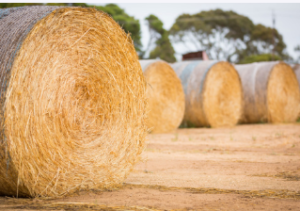 It also eliminates the weak spots that can develop with older style netwrap, which may cause fodder to protrude or misshapen bales.
Better Oxygen Barrier
Net replacement film, also known by its abbreviation NRF, adds an extra layer of plastic tight around the barrel of a bale to significantly improve the oxygen barrier – preventing air permeation into the silage and, therefore, considerably decreasing dry matter losses. Bales wrapped with NRF hold together better and can be stored for extended periods, leading to higher-quality silage. It is a significant advantage over older round bale net wrap styles prone to flapping in the wind and can even break when handled. NRF also adds strength to the bale and reduces vermin and handler damage.
NRF is explicitly designed to work with the latest generation of combination round baler machines or combo bale wrappers – making it easier to use and reducing labour costs on the farm. This type of wrap is ideal for whole-crop barley, oats, alfalfa, lucerne, wheat and rye – leafy and stemmy.
Studies have shown that a high-quality oxygen barrier significantly reduces silage top waste and dry matter losses, saving on storage costs. In addition, NRF prevents mould spores from entering the silage and causing deterioration in the hay or silage. A recent study using Passion Yellow Oxygen Barrier Film versus standard polythene silage cling film showed that the Passion film prevented damage much more effectively.
Bales wrapped with NRF are more durable during transportation than traditional net wrap, meaning less handling and a better chance of a higher-quality finished product. NRF is pre-stretched during production, and the rolls are long, resulting in fewer roll changes on the machine, making it faster to use than a net wrap.
Unipak Power Film https://unipak.com.au net replacement film is the newest technology. It works with most modern combinations of round baler and wrapping machines, including the Krone Komprima, Goweil G5040 Kombi and some Claas, Vicon, Welger, Orkel and McHale machines. This new technology replaces the need for netwrap, allowing one person to complete both functions of the baling and wrapping process – significantly reducing time on the job. Feeding is also faster as there is no need to separate the net from the film when opening a bale.
Better Fermentation
The older style of the net wrap can leave gaps through which air can permeate. It can impact the ensiling process, causing silage losses. A newer type of netting that uses film instead is better at preventing this, meaning it can help improve the quality of your hay.
In addition, net replacement film also helps improve the strength of the bale. It can make it easier to open the bales mechanically or manually and can reduce waste. It can also reduce the risk of your fodder becoming enmeshed during feed out, making handling and storing the bales easier.
Another advantage of the newer netting style is its excellent protection of the bales during storage. It can be important if you’re storing your hay for extended periods, as the risk of mould and other potential issues increases. The more robust wrapping means your bales are better protected, which can help prevent silage loss during the storage phase.
Designed to be used on the latest generation of combination round baler machines or combo bale wrappers, the film replaces the need for a traditional net to hold the bale together. It is a great time saver, turning the wrapping process into a one-person job. It can save you valuable work hours and labour costs, allowing you to spend more time on other parts of the business.
The net is made from a low-transmission film, which prevents oxygen from entering the bale during storage. It is a critical factor in achieving high-quality hay. Moreover, the net is thicker than traditional netting, which can offer excellent durability against the elements.