
RFID tags enable the scanning and identification of items without full visibility or direct line of sight, eliminating manual scanning by workers and resulting in significant time savings.
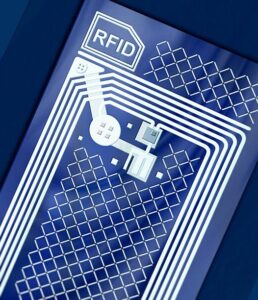 Some applications require RFID tags designed to withstand harsh environments like autoclaves. Other applications need specific sizes of tags to fit crevices or materials within them.
Identification
RAMP RFID tags Australia use radio waves to identify themselves and communicate with readers. All information from or to tags is encrypted for interpretation by readers; RFID readers contain antennas that emit interrogating radio waves for reading and decoding information on RFID tags.
Position and type of tag can have an effect on its ability to be read from a distance, as can frequency of radio waves used by RFID and antenna size, equipment in your facility and materials nearby that might interfere with read range – for instance if placed near metal or liquid, interference could reduce read range considerably.
RFID tags can serve as a complement or replacement to barcodes and other forms of identification, providing more detailed and accurate data than barcodes, while allowing multiple items to be read at once, thus eliminating manual scanning time and increasing throughput. Furthermore, information stored and accessed electronically helps eliminate transcription errors, duplicate data entry and missed items due to process inefficiencies.
RFID’s chief advantage lies in not requiring line-of-sight scanning, which can be an obstacle in warehouse environments. Furthermore, its noncontact nature makes scanning objects without damage possible and makes installation simple in various locations (even high-rise warehouses).
RFID can also be used to track assets, inventory and people, as well as for security. For instance, tags affixed to workers badges can help monitor their location or prevent them from leaving authorised areas; RFID tags can even be embedded into clothing – something already seen in sports apparel products.
RAMP RFID tags Australia has the potential to access personally sensitive data has raised privacy issues. As a result, standard specifications were created to address them; once adopted by widespread adoption of the technology.
Tracking
Radio frequency identification, commonly referred to as RFID, can be utilised in numerous applications for tracking objects. Utilising electromagnetic fields to read tags attached to objects, RFID is more accurate than barcode scanners and can track virtually anything – humans and animals alike! Furthermore, its data provides businesses with tools they need to better manage inventory and assets as well as increase productivity.
Some RFID readers operate at low frequencies (30 KHz to 300 KHz) with limited read range, while others operate on higher frequencies such as HF (3-30MHz and UHF (3-30GHz) for better range and penetration through objects. Low-frequency tags offer lower costs but cannot penetrate most objects, so are best used for inventory tracking in warehouses or transit systems (such as transit fare payment cards or electronic toll collection) while high frequency and UHF readers provide much wider reading distances of 100 meters or more; some even allow simultaneous scanning of multiple tags simultaneously! These readers can even be employed for retail or supply chain applications!
RFID data collected by an RFID tag can be transmitted directly to a computer system via an interface like Ethernet or Bluetooth, known as radio-frequency telematics. This transmission of information allows businesses to enhance business processes by eliminating human error or providing real-time inventory status updates; RFID can even help businesses map where products have been in a facility to identify bottlenecks or potential problem spots.
RAMP RFID tags Australia can assist businesses in cutting costs by eliminating wasteful inventory practices such as shrinkage or the need to reorder due to product loss. Retailers utilise RFID tags in-store or shelf inventory locations and tracking customer orders – saving both time and money by eliminating manual scans of every product individually.
Healthcare institutions also benefit from RFID, which can help track medical equipment and medications. RFID’s ability to limit inventory waste may help offset rising healthcare resource costs through improved accountability and supply efficiency; however, staff concerns have been reported as impeding successful implementation in hospital settings; to minimise negative perceptions while realising its benefits effectively. Educating staff members on its uses will reduce negative opinions while fully realising its advantages.
Security
Warehouse RFID systems offer many benefits to warehouse operations, including improved inventory visibility, leading to better customer service and more efficient operations. Furthermore, this eliminates the need for employees to manually scan and log incoming and outgoing products – potentially leading to mistakes with transcription or missing items and double counting.
RFID tags operate independently from line-of-sight systems like barcode scanners, making them a more reliable solution. Furthermore, they reduce labour costs associated with manual scanning by eliminating the need to turn boxes over or apply barcodes – freeing up workforce members for more valuable tasks while decreasing losses from theft or damage.
Dependent upon your requirements and environment, RFID tag types come in many varieties. Some have long range communication with readers at a distance while others feature shorter read range but greater stability and durability. Which option you select ultimately comes down to your unique circumstances and surroundings.
If your RAMP RFID tags Australia system involves sensitive data, privacy enhancement features may be beneficial to protect it. Such features help avoid skimming and eavesdropping by protecting conversations between reader and tag. One-sided encryption works in this regard: the tag sends coded lines directly to the reader, which then deciphers it with an algorithm exclusive only between them; this prevents skimming since information won’t be transmitted back out as transmission from tag.
Another security feature is the ability to temporarily disable a tag’s power by sending it a command to switch off its radio signal. Once powered off, however, a tag is rendered inoperable until activated using its original tag reader that was used initially to initialise it.
RFID technology is frequently utilised for access control in lock systems. This process typically employs long-range (LF) RFID and proximity or smart card technology to provide access to these locks; such cards may also be used for vehicle logistics, industrial applications and parking access in some instances.
Privacy
RFID tags, while small, easily concealed, and lasting for decades, pose numerous privacy concerns. Their sensitive data storage capabilities and ability to leave behind traces that can identify individuals is cause for alarm when used as part of state ID systems or embedded within food or medical products.
As a result, certain governments have limited or banned RFID usage in certain applications. At the same time, privacy concerns have led companies to develop standards for RFID technology which include provisions to address those concerns.
Privacy in RFID lies with understanding that it’s not just the tag itself that stores or utilises private information; rather it is how that data is utilised and stored. An RFID chip’s information could be linked with dynamic database records that provide additional details – for instance its origin or production date – about an item being sold; consumers could then receive this information when buying that item or retailers could better anticipate consumer demands by providing this data to consumers at point of purchase.
One way of protecting data on RAMP RFID tags Australia is through encryption or other forms of cryptographic protection, while one-sided encryption between tag and reader is the best way to prevent eavesdropping and skimming – since all computation takes place within the reader and not on the tag, therefore communication between them can only be overheard by that reader – not other parties.
Passive tags, which rely solely on electromagnetic energy from readers, have limited communication range and should only be read when close proximity with a reader exists. While this does limit how easily other systems link directly with individuals without consent, sensitive data could still be acquired without it. According to guidelines issued by various authorities in such circumstances, companies should ensure they give notice to consumers regarding any linking of an RFID tag to personal records and provide easy ways for consumers to remove or deactivate it as quickly as possible.